
Forza Horizon 6 Beginner’s Guide: 5 Things to Do First | Japan Map Tips & Game Pass Info
*This article contains affiliate and promotional links.
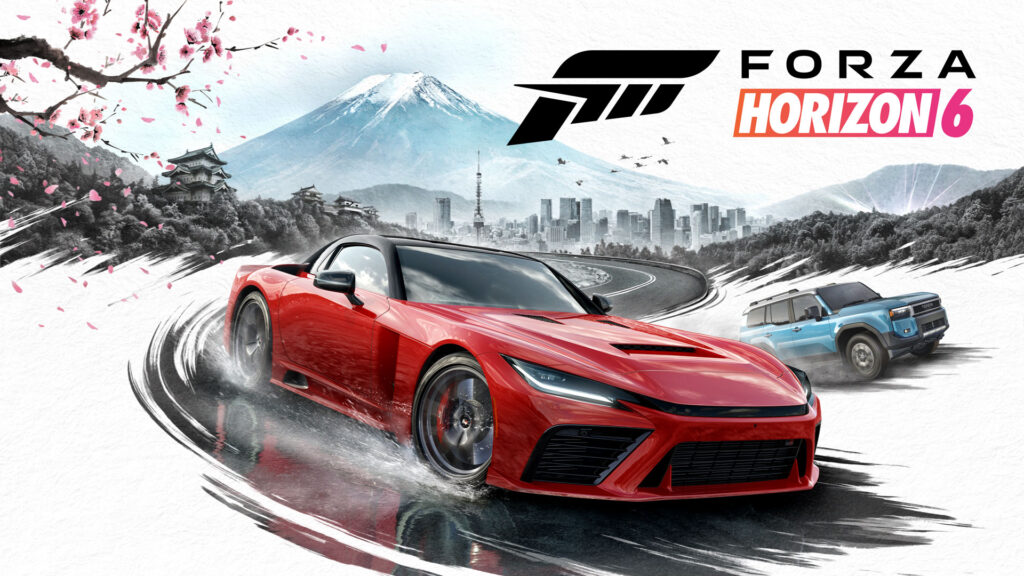
It’s finally here — Forza Horizon 6, the first entry in the series set in Japan. Even before its official launch on May 19, 2026, social media was already overflowing with reactions: “I souped up a kei truck (Japan’s iconic compact pickup) and blasted through the expressway at 300 km/h,” and “Driving through a mountain pass while cherry blossoms fall is genuinely emotional.” At the same time, newcomers to racing games have been asking, “Is it hard?” and “Where do I even start?”
This guide is for anyone picking up Forza Horizon 6 for the first time. We’ll cover the basics, the highlights of the Japan map, the five things you should do first, the standout new features, and how the community has received it. If you’re on Xbox or PC Game Pass, there’s no extra cost to jump in — so read through this first and get the full picture before you hit the accelerator.
Source: Xbox Wire
What Is Forza Horizon 6? The Basics at a Glance
In this section, we’ll break down what the game is, when it launched, how much it costs, and how to get it — so you can hit the ground running from the very start.
Forza Horizon 6 is the latest open-world racing game from Playground Games, published by Xbox Game Studios (Microsoft). “Open-world racing” means you can freely explore a massive map — cities, mountains, coastlines — and take part in races and events at your own pace. This is the sixth mainline entry in the Horizon series, following Forza Horizon 5 (2021, set in Mexico).
The game launched on May 19, 2026 for Xbox Series X|S and PC, with Premium Edition owners getting early access from May 15. A PS5 version is planned for later in 2026. Pricing is $59.99 for the Standard Edition, $79.99 for the Deluxe Edition, and $99.99 for the Premium Edition. Xbox and PC Game Pass subscribers can play at no additional cost from day one.
You can purchase the game from the Xbox official store or Steam. If you’re on the fence, Game Pass is the lowest-friction way to try it — one monthly subscription gives you access to this game plus a huge library of other Xbox titles.
The Japan Map: What Can You Actually Drive Through?
In this section, we’ll walk through the three main areas of Horizon Japan: the Tokyo urban zone, the mountain and mountain pass regions, and the 30+ real-world landmarks scattered across the map.
The biggest talking point of this installment is “Horizon Japan” — the series’ first map set in Japan. With over 30 real-world landmarks recreated in-game, it’s essentially a virtual road trip across the country. International players have been just as enthusiastic as Japanese fans, praising the map as a love letter to Japan’s landscape and culture.
Source: Xbox Wire
Tokyo (Shibuya, Urban Expressways, Waterfront)
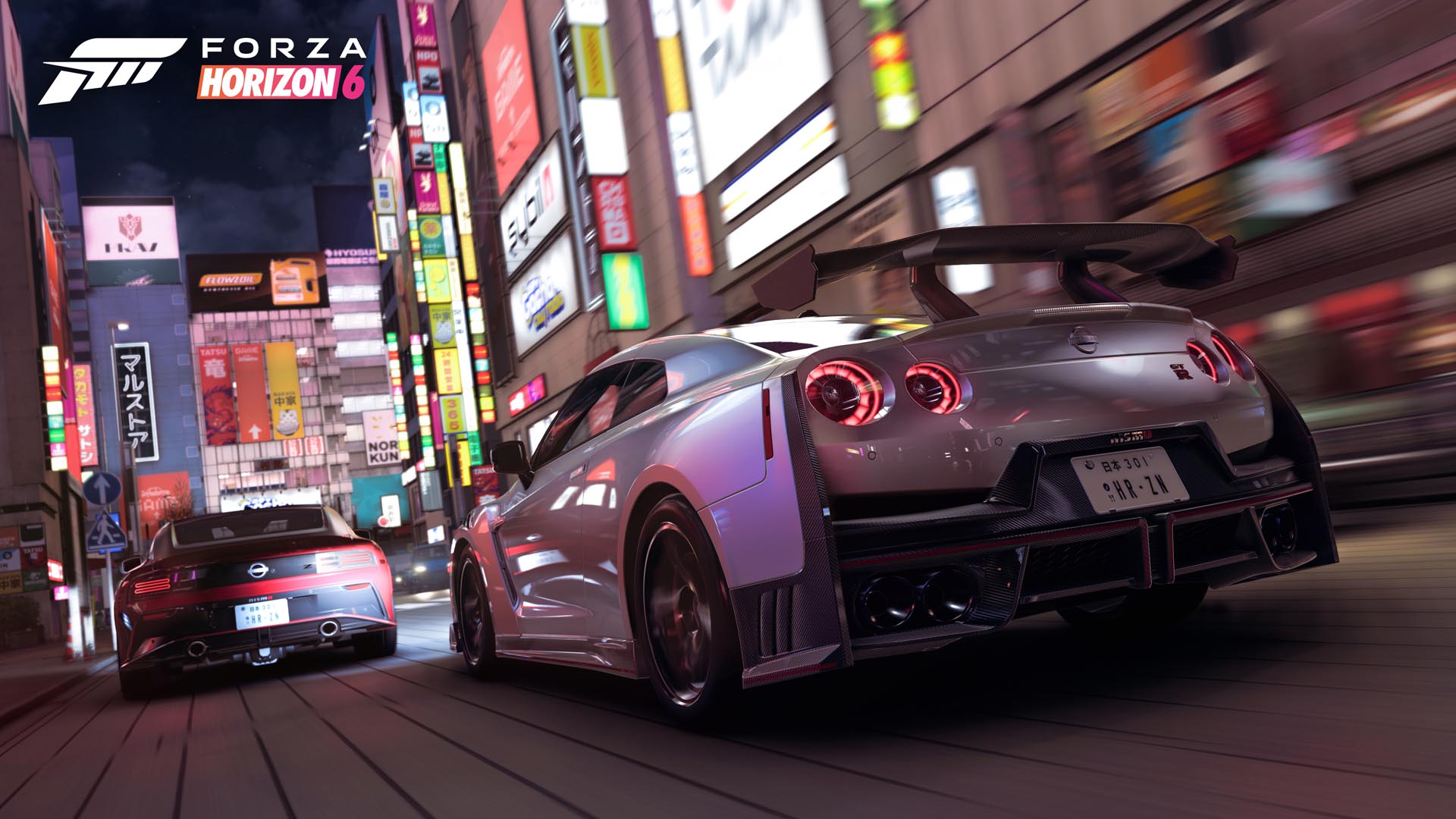
The Tokyo area is roughly five times the size of the urban district in FH5 (Guanajuato, Mexico), making it the largest city map in the franchise’s history. It’s divided into four distinct zones — Suburbs, Harbor District, Industrial Zone, and Downtown — each with a completely different atmosphere and vibe. You can race past the Shibuya Scramble Crossing, cruise by Tokyo Tower, and thread through elevated expressways that feel straight out of a Japanese street racing film.
The city truly shines at night. Ray-traced global illumination (GI) — a rendering technique that simulates how light reflects and diffuses in the real world — makes neon signs bleed onto wet asphalt and casts smooth, gradient shadows. The result looks almost photorealistic. Honestly, just cruising the waterfront and elevated highways could absorb hours on its own.
Source: Xbox Wire
Mountains & Mountain Passes (Japanese Alps, Snow Canyon, Touge Roads)
For drivers who love technical roads, the mountain region — inspired by the Japanese Alps — is a dream. The game includes a “Snow Canyon” based on the famous Tateyama Kurobe Alpine Route, where walls of snow tower over the road, as well as a recreation of Shirakawa-go, the UNESCO World Heritage village known for its traditional thatched-roof farmhouses. This alpine region is snow-covered year-round, marking the series’ first permanent snow map.
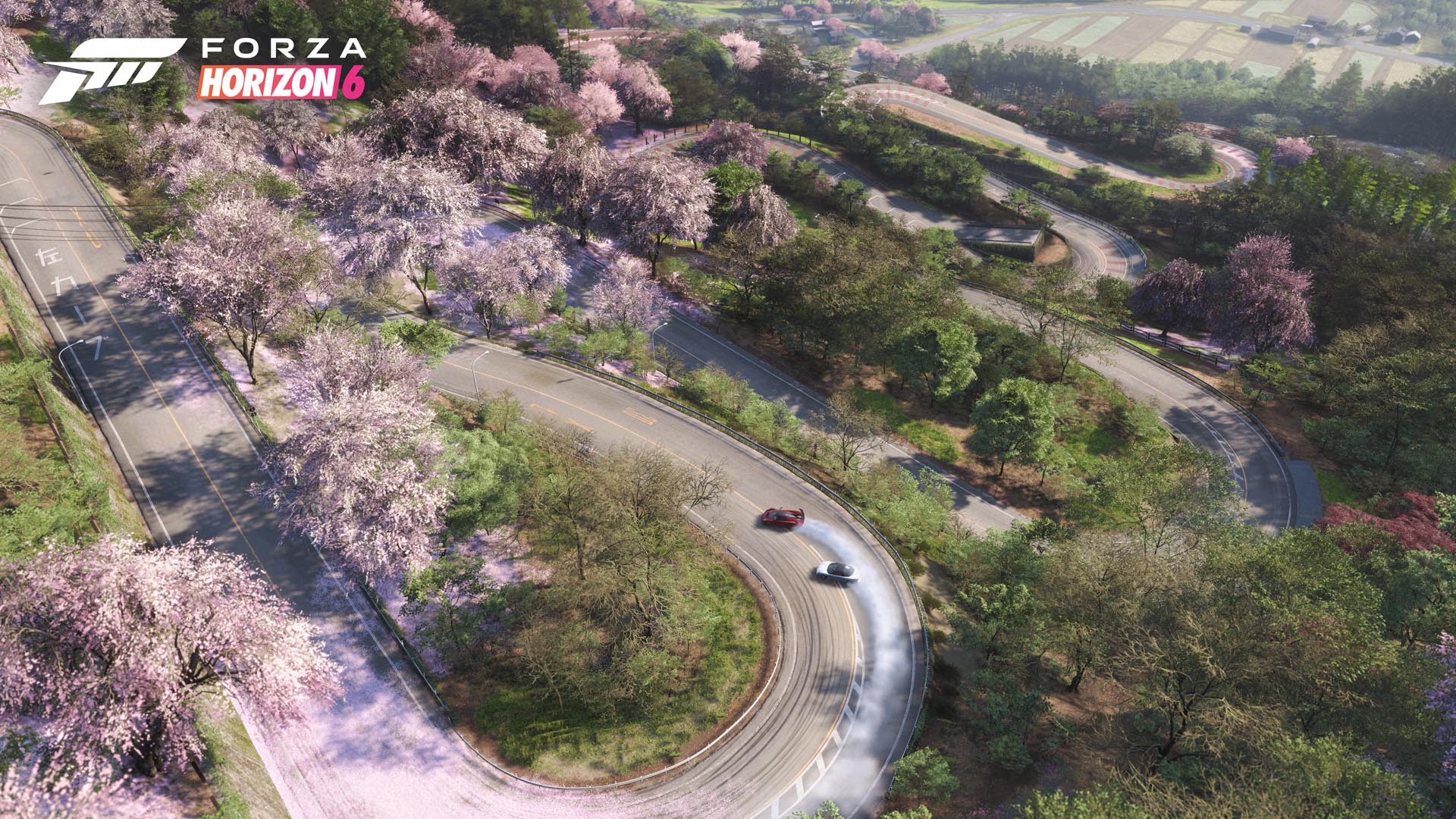
Taking a JDM (Japanese Domestic Market) car through tight switchback mountain passes — known in Japan as “touge” — is one of the game’s signature experiences. JDM cars are tuned for the twisty roads of Japan, offering predictable handling through tight corners. AWD legends from Subaru, Mitsubishi, and Nissan are right at home on snowy, rough mountain terrain.
Source: Xbox Wire
30+ Iconic Landmarks (Mt. Fuji, Kinkaku-ji, Shirakawa-go & More)
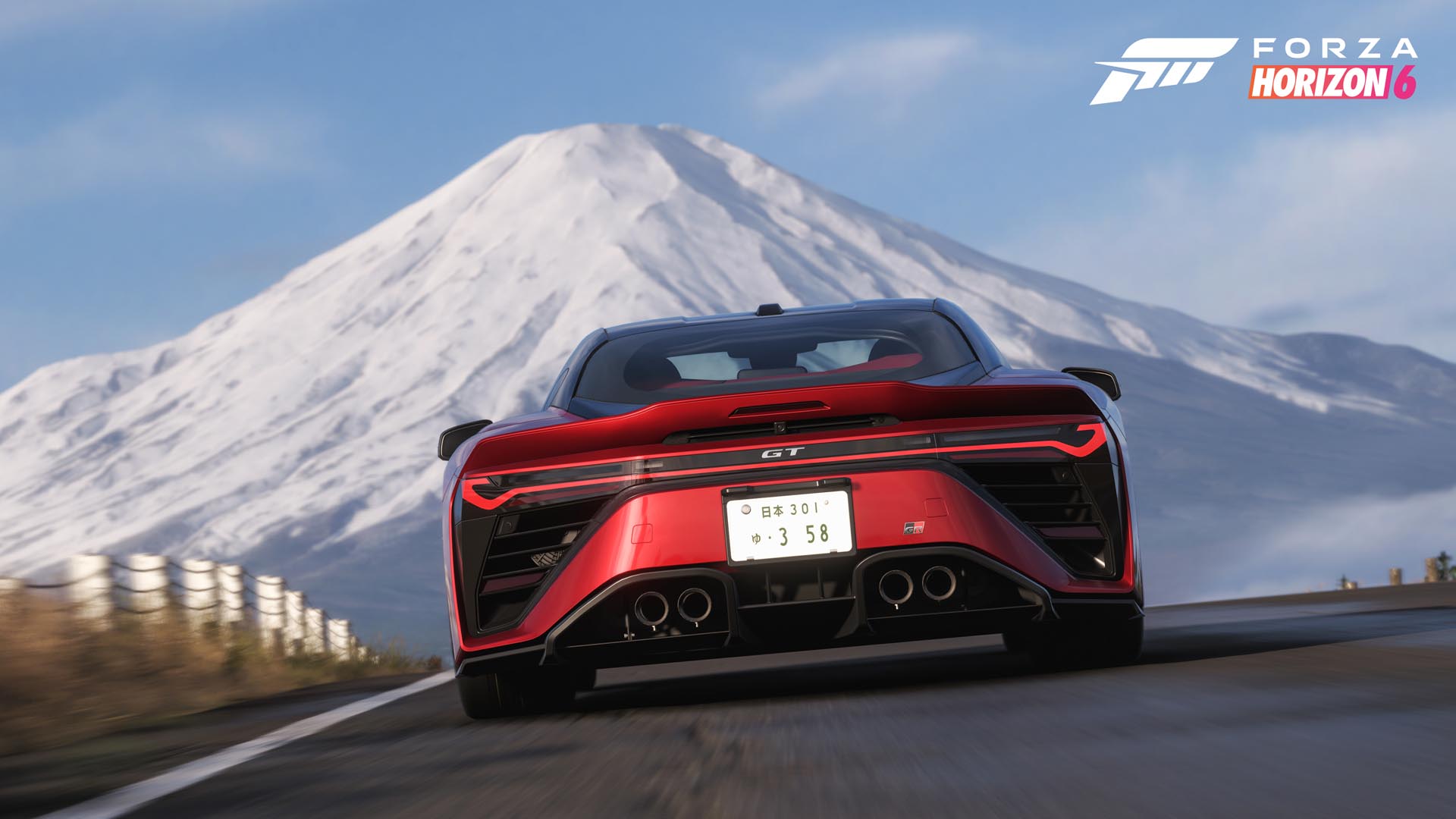
Mt. Fuji, Kinkaku-ji (the Golden Pavilion), Shirakawa-go, and the Tateyama Kurobe Alpine Route are among the 30-plus real-world locations recreated in the game. Discovering these through the “Discover Japan” mode (more on that below) is one of the defining ways to experience the title. Note that Mt. Fuji itself is a no-drive zone — treated as sacred ground — so you’ll admire it from the roads at its base and surrounding countryside.
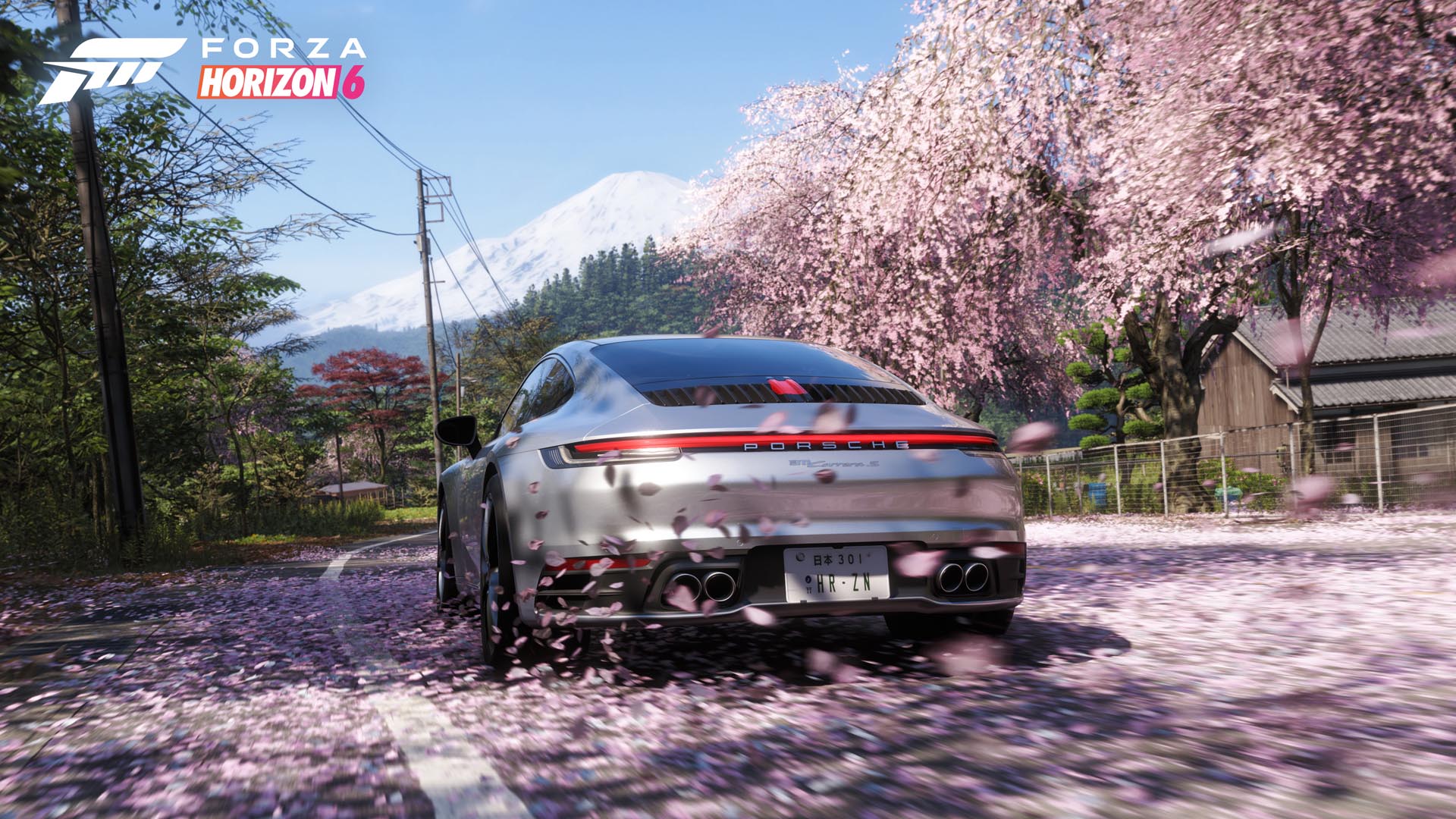
Cherry blossom spots are faithfully represented too. Driving through a tunnel of falling sakura petals is one of those moments that makes this game genuinely special, and it’s a big reason why “virtual tourism” has become a real conversation around Forza Horizon 6.
Source: Xbox Wire
5 Things Beginners Should Do First
In this section, we’ll walk through five steps to tackle in priority order right after starting the game. Follow this sequence and you’ll avoid the classic beginner trap of not knowing what to do next.
Here’s a time-ordered breakdown of what to do during your first three hours. New players to racing games are most likely to feel lost early on — so stick to this order and you’ll get your footing fast.
1. Picking Your Starter Car (3 Options Explained)
Right at the start, you’ll be asked to choose one of three starter cars: the 1970 GMC Jimmy, the Nissan Silvia, or the Toyota Celica. For beginners, the GMC Jimmy is the clear recommendation. It’s AWD (all-wheel drive), meaning it handles well on all surfaces — including the game’s snowy mountain roads and gravel passes.
Both the Silvia and Celica are FR (rear-wheel drive), which makes them prone to spinning out if you’re not yet comfortable with the throttle. That said, if you’re keen to practice drifting or want to dive into JDM car culture from the start, either is a valid choice. You’ll be able to get other cars for free as you progress, so think of your starter vehicle as purely a learning tool.
2. Setting Difficulty and Using Driving Assists
If racing games feel intimidating, set the difficulty to the lowest level right away. The game offers a robust suite of assists: automatic braking, steering assist, and a racing line overlay that shows you the ideal path through every corner. With all assists turned on, staying on the road becomes much more manageable.
On the flip side, experienced players will want to know that cranking up the difficulty adds credit (in-game currency) multipliers — so there’s a real incentive to push yourself. But the core philosophy of this game is “you don’t have to win, you don’t have to know where you’re going.” Adjust difficulty at your own pace and enjoy it.
3. Prioritize Exploration with Discover Japan Mode
The new “Discover Japan” mode rewards you for finding landmarks, taking photos, and completing story chapters — with rare cars and property unlocks as the payoff. Rather than jumping straight into competitive races, exploring the country and sightseeing is how you’ll most naturally build up credits and a vehicle collection in the early game.
For beginners especially, hold off on racing and spend the first few hours just wandering. Discover Japan alone can easily fill your first session, and you’ll come away with plenty to show for it.
4. Pick Up Discounted Cars at Green CT Icons
Green icons labeled “CT” (Car Token) appear on the map, and they let you buy specific vehicles at heavily discounted prices. You earn Car Tokens naturally by completing Discover Japan events and finding landmarks — look for the green icons along major roads and near festival hubs. Don’t ignore them when you first open the map.
Credits are tight early on, so grabbing discounted cars is far more efficient than paying full price. Find a car you love, buy it cheap, and pour your time into customizing it — that’s the sustainable way to stay engaged long-term.
5. Unlock the Festival Venues (Apex and Wilds) Early
The game has multiple festival hub locations, and the two most important to unlock early are “Apex” (focused on urban and circuit events) and “Wilds” (focused on off-road events). Unlocking a venue enables fast travel to that area, which dramatically cuts down on time spent just getting from place to place.
Both venues unlock through story progression. Apex typically opens after completing 3–4 main story events (roughly 1–2 hours in), and Wilds follows once you’ve pushed through another 2–3 mountain and off-road chapters. Focus on the main story early on, and once both venues are open, bounce between them to experience everything the game has to offer.
New Features Worth Knowing in Forza Horizon 6
In this section, we’ll highlight four features that are either brand new or significantly upgraded in this installment. These are useful reference points whether you’re a series veteran or picking up a Horizon game for the first time.
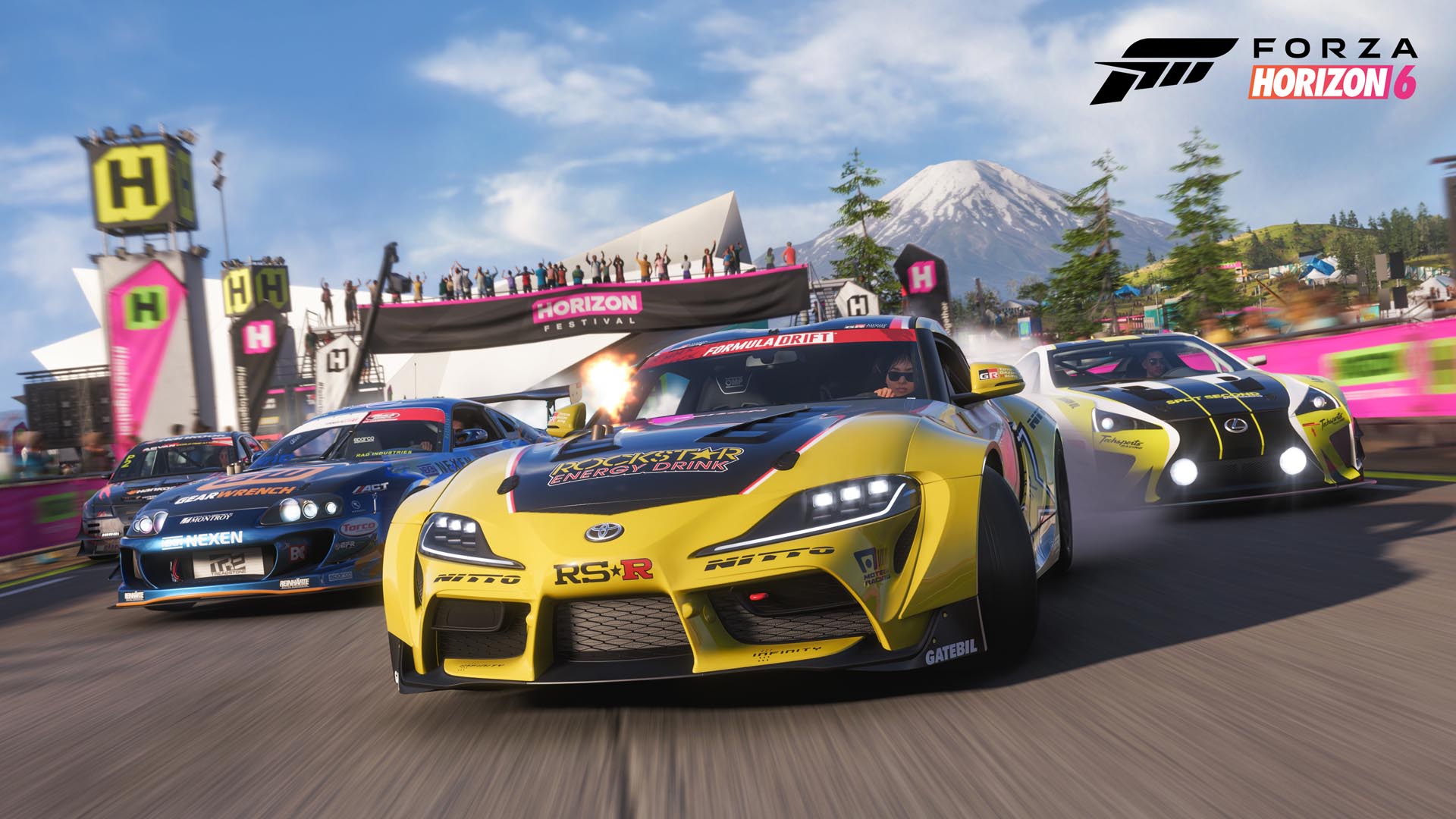
Forza Horizon 6 represents the biggest generational leap in the series, with enough new content to feel fresh even for longtime fans. Here are four features that stand out.
Source: Xbox Wire
CoLab (Collaborative Custom Event Building)
In this subsection, we introduce “CoLab” — a new feature that lets you build custom events in the open world together with friends.
“CoLab” is an evolved version of the EventLab toolkit from FH5. You and your friends can collaboratively design and place custom events anywhere in the open world — jump ramps, loops, complex multi-stage courses — and share your creations with players worldwide. The community has already produced some wildly creative tracks: spiral tower climbs, giant jump courses, and obstacle gauntlets that no official event would attempt.
If you enjoy creative or sandbox modes in games, CoLab has serious staying power. When racing gets repetitive, switching to building keeps things fresh indefinitely.
Expanded Customization (Window Liveries, Mixed Wheel Sets)
In this subsection, we cover the significantly expanded visual customization options introduced in this game.
Visual customization has taken a meaningful step forward. You can now apply liveries (custom paint designs and stickers) directly to windows, and you can equip different wheels on the front and rear of your car. Whether you’re going for an extreme street build or a serious track setup, the visual language available to you is broader than it’s ever been in the series.
Given how deeply JDM culture runs through this game’s DNA, the attention to this level of customization detail feels earned — and enthusiasts will appreciate it.
Seamless Multiplayer (Car Meets, Drag Meets)
In this subsection, we cover the redesigned multiplayer system that lets you join other players without any loading screens.
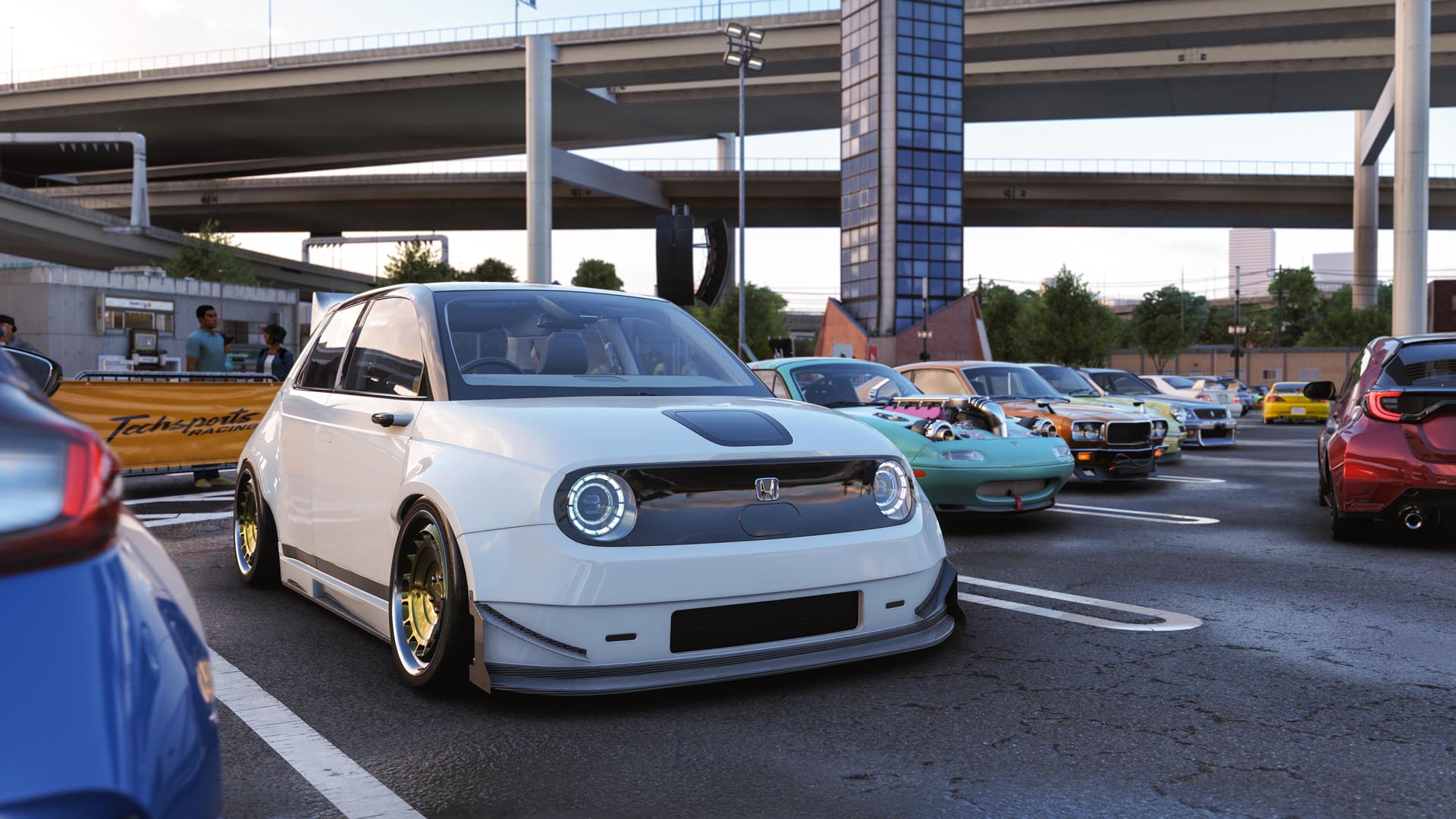
The game is cross-play enabled, letting Xbox, PC, and (eventually) PS5 players all share the same world. Events like Car Meets, Time Attacks, and Drag Meets are joinable seamlessly — no loading screens, no lobbies. You might just stumble onto a Car Meet while cruising the waterfront and pull in naturally. It’s the closest thing games have come to replicating the organic feel of real car culture gatherings.
Source: Xbox Wire
Japanese Artist Soundtrack (Ado, Creepy Nuts, YOASOBI)
In this subsection, we cover the in-game soundtrack and the audio technology that makes the Japan map feel fully immersive.
The in-game radio features music from prominent Japanese artists including Ado, Creepy Nuts, and YOASOBI. The game’s proprietary spatial audio system, “Triton Acoustics,” dynamically adjusts how sound behaves depending on whether you’re inside or outside the car and what direction it’s coming from — making the soundtrack feel genuinely three-dimensional. Driving Japan’s roads with Japanese music playing is one of those simple, compound pleasures that the game nails completely.
What Players and Critics Are Saying About Forza Horizon 6
In this section, we look at review scores and player reactions so you have real context when deciding whether to start playing. Consider this your decision-making reference.
The reception has been overwhelmingly positive. On Metacritic, the Xbox Series X|S version holds a score of 92 (based on 65 reviews) and the PC version sits at 89 (43 reviews) — among the highest in the series’ history.
Multiple major outlets including Insider Gaming, Gamers Heroes, and VGC awarded the game perfect scores. According to Game*Spark’s international review roundup, some critics are already calling it the best game of 2026. Player numbers have been equally impressive: peak concurrent users during the early access period reached approximately 3.5 million — more than double the peak for FH5 (roughly 1.7 million).
Among players, standout reactions include “I modified a kei truck (a tiny Japanese mini-truck) and hit 300 km/h — it was ridiculous” and “You can feel genuine respect for Japan in every detail of this map.” The landscape authenticity is the most consistently praised element.
Common criticisms include “Mt. Fuji is off-limits (treated as sacred, no driving allowed on it)” and “the narrow alleyways are genuinely hard to navigate at speed.” Both are worth knowing as a new player so they don’t catch you off guard.
Conclusion: Why Now Is the Perfect Time to Start Forza Horizon 6
Forza Horizon 6 manages to be deeply accessible for newcomers while offering the kind of depth that makes series veterans nod in appreciation. Japan as a setting, 550+ cars, and zero extra cost on Game Pass — everything is aligned for this to be your entry point into the franchise.
“You don’t have to win. You don’t have to know where you’re going.” That’s the philosophy baked into this game. Even if racing isn’t your thing, the exploration and sightseeing alone are designed to keep you entertained. There’s no pressure — just pick your pace and enjoy the ride.
The best way to start: sign up for Xbox Game Pass and boot it up without overthinking it. Once you’re in, follow the five steps from this guide — choose your starter car, set your difficulty and assists, explore with Discover Japan, grab discounted cars at CT icons, and unlock Apex and Wilds — and you’ll have a smooth, enjoyable first three hours. Your Horizon Japan is waiting. Make it yours.